
Typewriters & Models
Cataloging model lineages, variants, serial ranges, and regional production differences.
Institutional Research Platform
A Global Center for Typewriter Research, Documentation & Preservation
TRC documents, studies, and preserves the technological and cultural heritage of typewriters, typewritten documents, and writing systems through globally connected archival research and public knowledge access.
Research
Archival documentation
Preservation
Technical continuity
Global collaboration
Institutions & contributors
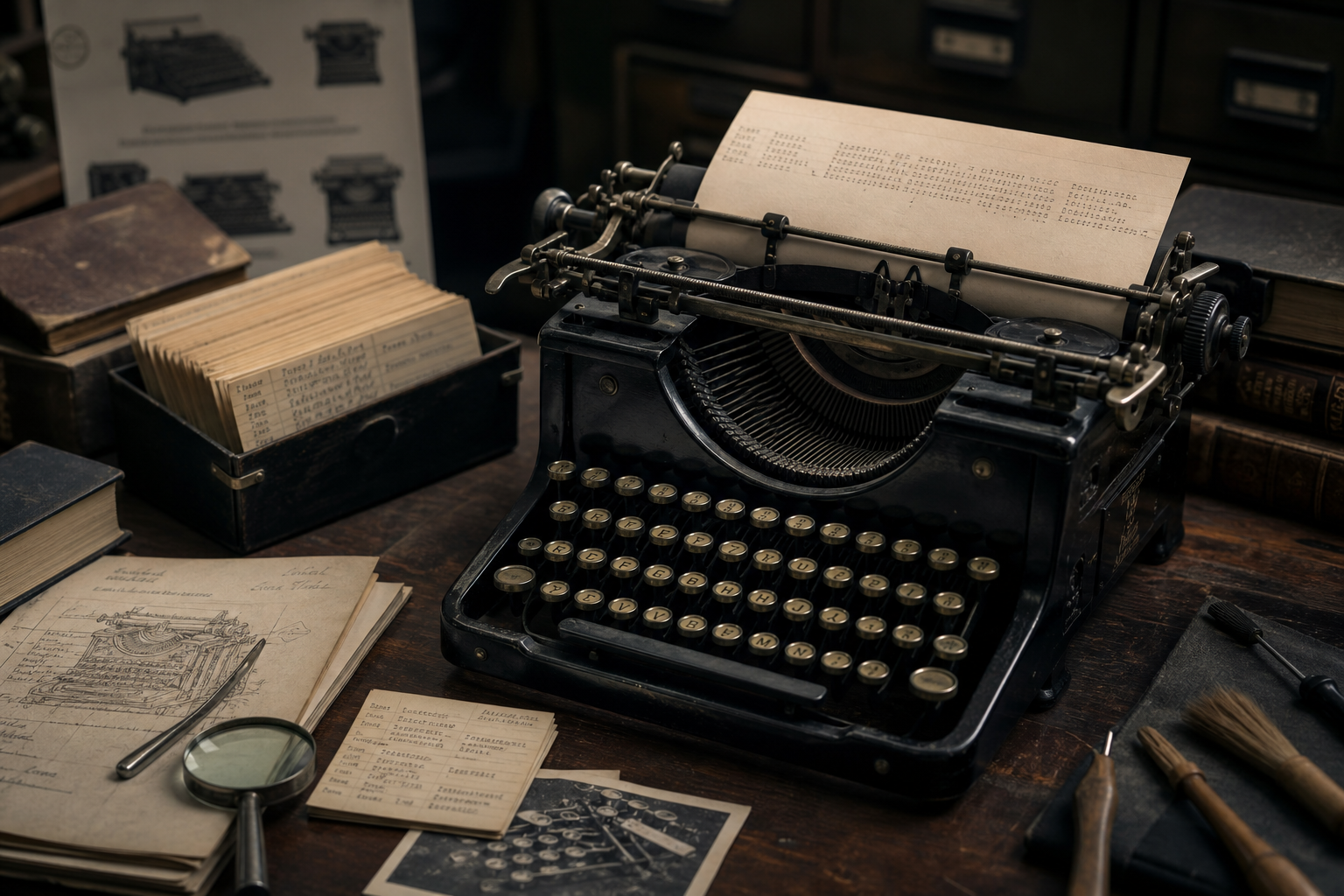
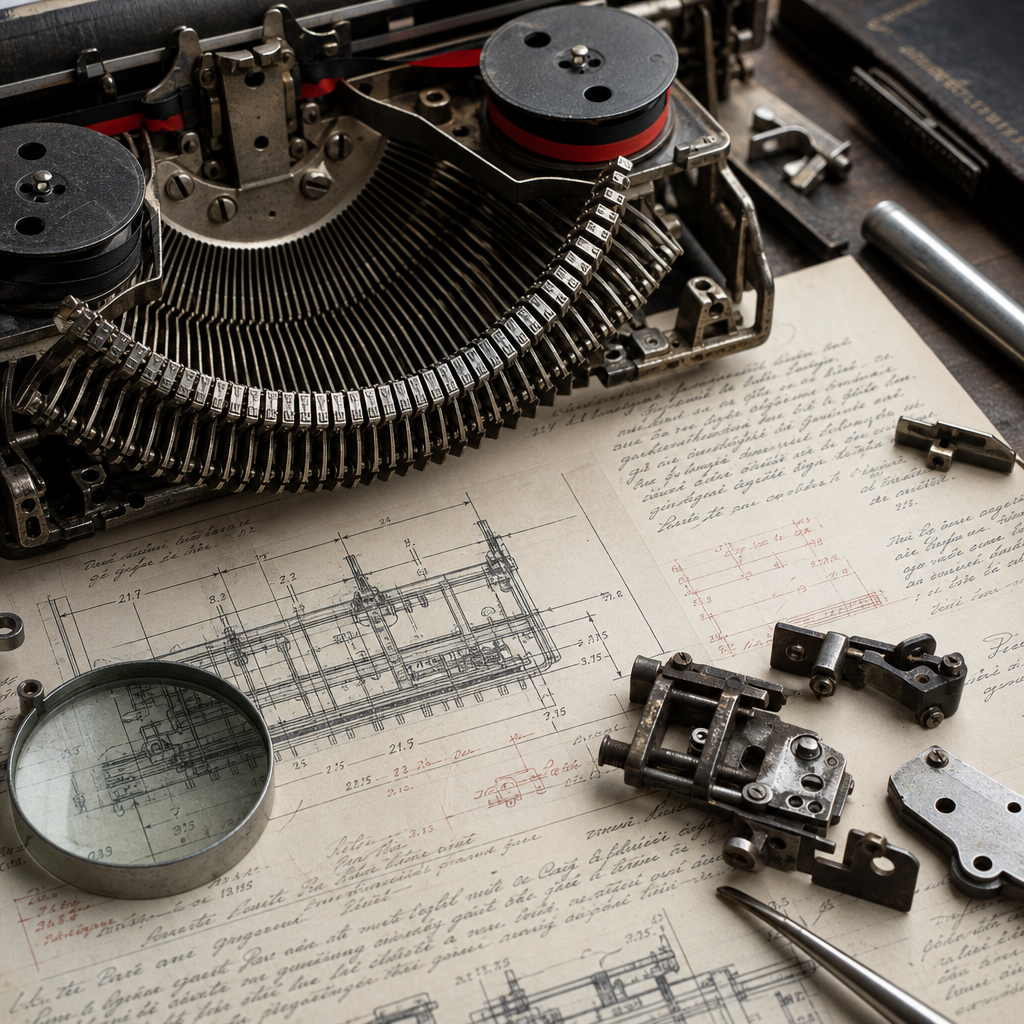
Research as infrastructure
Structured inquiry across machines, mechanisms, and their technological contexts.
Documentation with provenance
Cataloging models, makers, and source records with consistent archival discipline.
Preservation for longevity
Conservation-minded guidance that helps keep working artifacts and records accessible.
Global connection by design
A shared platform linking researchers, institutions, and contributors across regions.
Research framework
TRC organizes its work across technical, historical, linguistic, and archival domains so specialists and the public can navigate typewriter knowledge with clarity.
Cataloging model lineages, variants, serial ranges, and regional production differences.
Tracing firms, patents, and industrial networks that shaped typewriter development.
Documenting escapements, linkages, tolerances, and engineering solutions across eras.
Mapping keyboard layouts, script adaptations, and multilingual typing conventions.
Preserving typewritten records, metadata, and provenance for long-term access.
Publishing conservation methods, parts knowledge, and preventive care standards.
Collections Overview
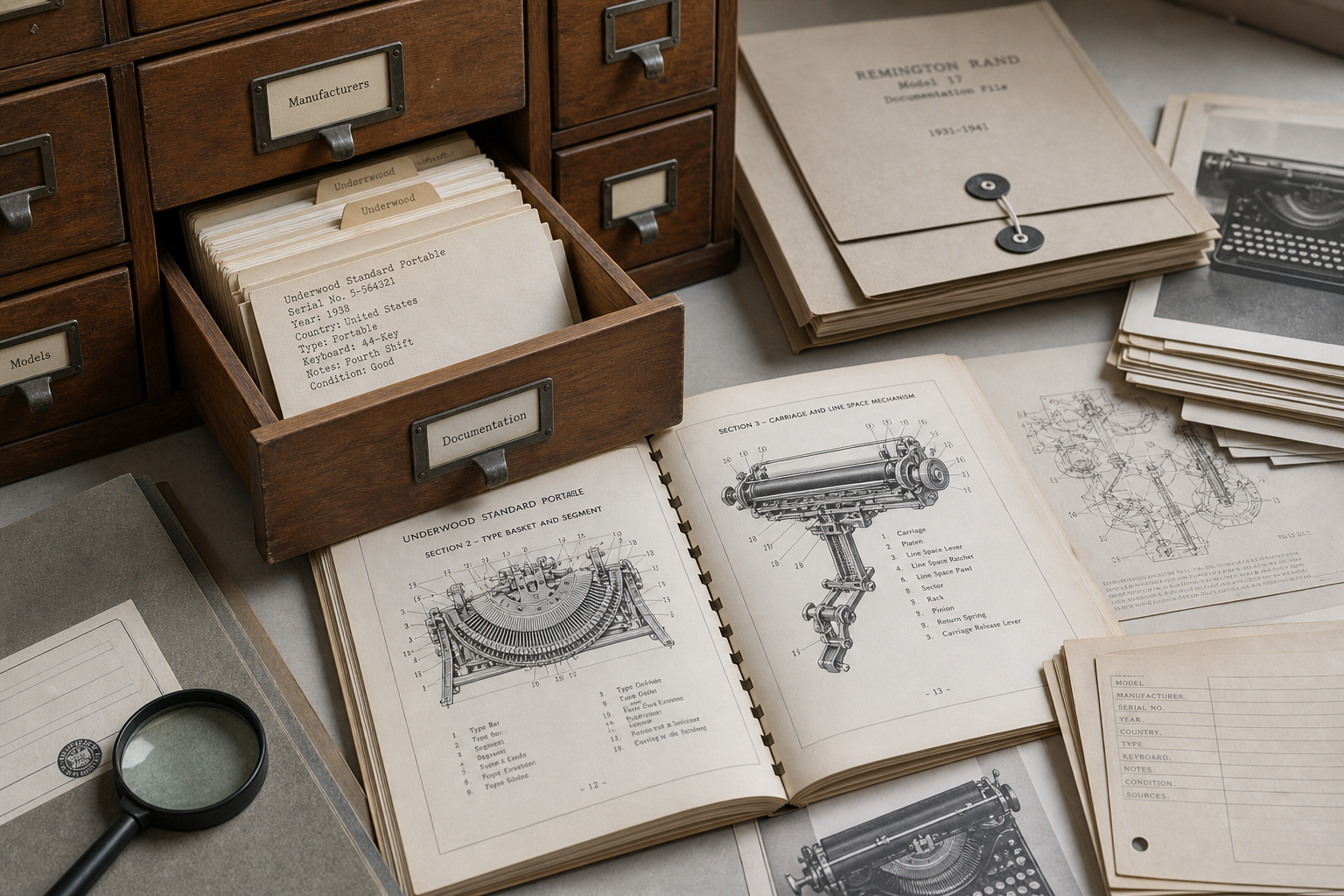
Collections are organized into archival groups so researchers can move from machine records through technical sources, primary documents, and research notes with clear continuity.
Archive Group A
Archive Group B
Archive Group C
Archive Group D
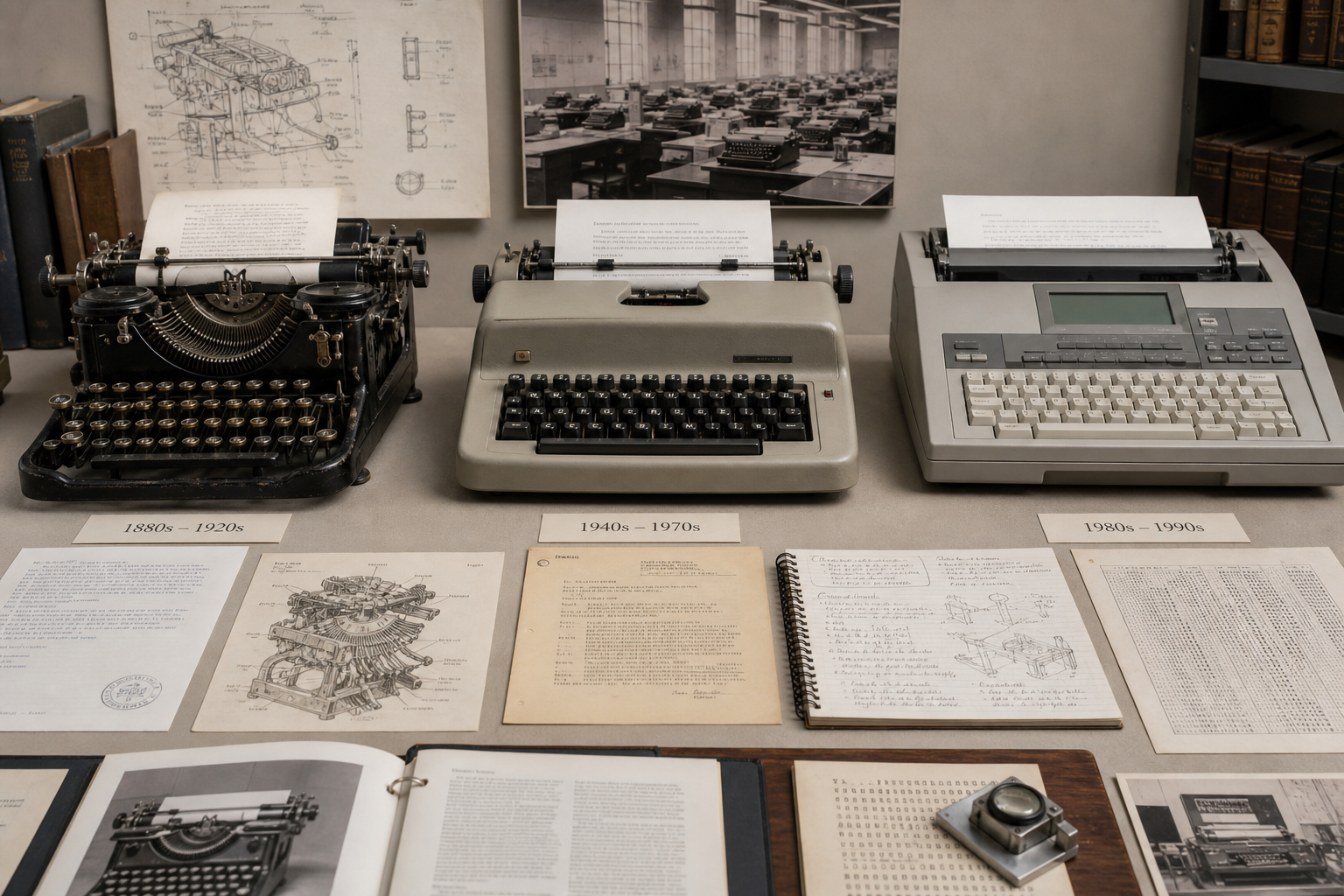
From early mechanism experiments to electronic systems, this timeline situates typewriters as a continuous technological and documentary tradition.
Prototype writing machines established key mechanical principles for repeatable character imprinting.
Layout choices and script-specific adaptations improved speed, legibility, and training consistency.
Mass production aligned parts, repair practices, and manufacturer ecosystems across regions.
Motor-assisted systems reduced keystroke effort and expanded office-scale typing workflows.
Electronic interfaces and stored text functions bridged analog typing to digital documentation culture.
Linguistic Research Layer
TRC documents how machines, keyboard logic, and typed expression adapted to multilingual realities worldwide.
Multilingual Typewriting
Latin, Cyrillic, Arabic, Greek, and mixed-script workflows in institutional and everyday use.
Keyboard Layout Records
Comparative mappings of national layouts, symbol placement, and typing conventions.
Regional Adaptations
Localized keytops, overstrikes, and manufacturer variants built for regional language needs.
Typed Language Culture
Forms, letters, poetry, and administrative writing that shaped modern document culture.
Restoration & Preservation
TRC pairs documentation with practical care so machines, manuals, and typewritten records remain stable, legible, and responsibly preserved.
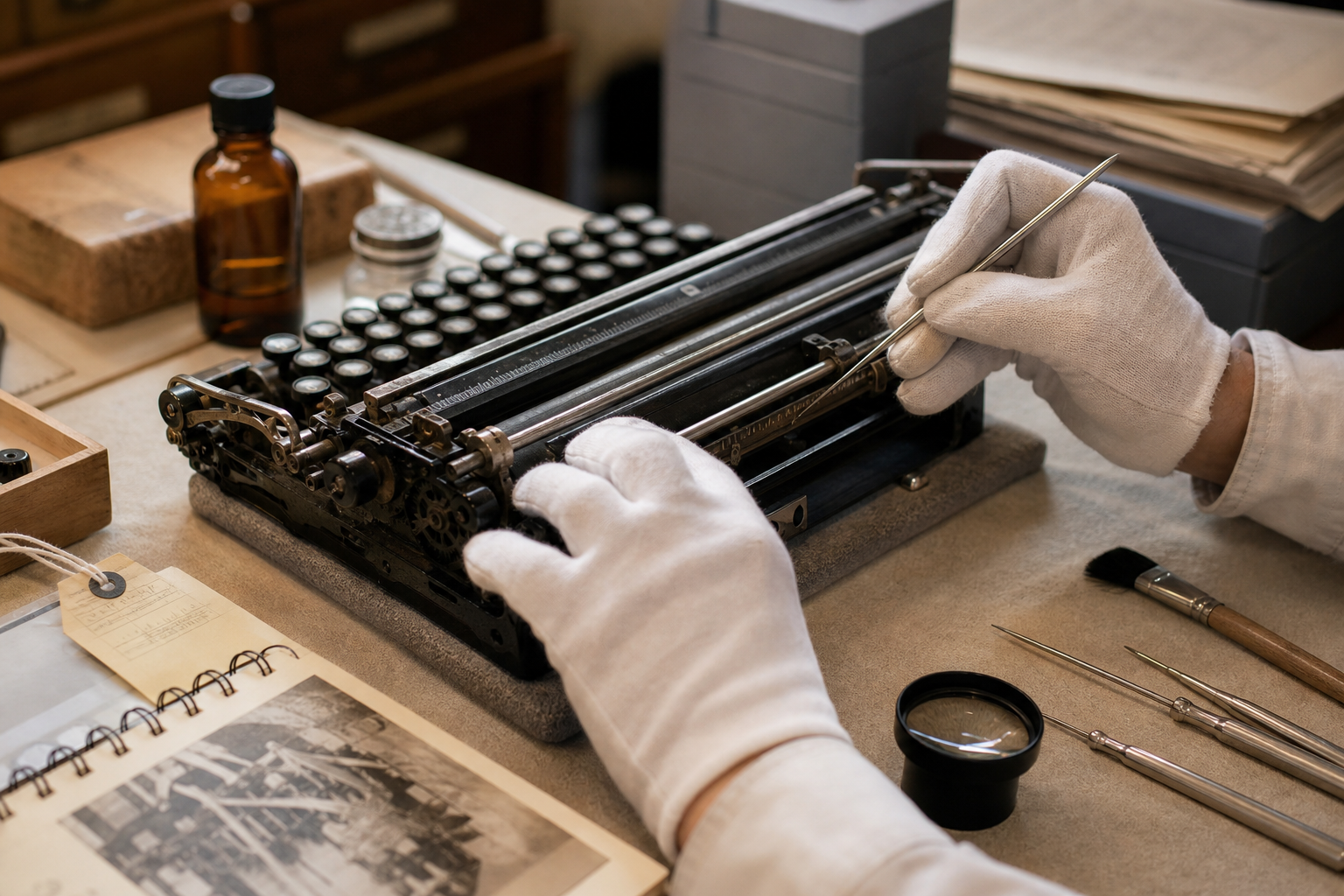
Identification guides for model, serial, and mechanism verification before intervention.
Maintenance awareness notes to recognize wear, corrosion, and handling risk early.
Restoration guidance emphasizing reversible methods and documented decision paths.
Conservation care protocols for storage climate, paper protection, and transport safety.
Preservation ethics briefs on authenticity, provenance, and transparent reporting.
Archives & Publications
TRC outputs are structured as citable records: publications, technical manuals, research notes, archival entries, and document studies curated for scholarly access.
Read PublicationsRibbon Transfer Metrics in Mid-Century Portables
Peer-reviewed synthesis of platen pressure, imprint density, and service intervals.
Segment Shift Calibration Protocol v3
Bench-tested adjustment sequence with tool tolerances and verification marks.
Typeface Wear Patterns Across Bilingual Keysets
Comparative note set from Arabic-Latin and Cyrillic-Latin field collections.
Factory Ledger Fragment, Vienna Works (1937)
Digitized acquisition metadata, provenance chain, and transcription status.
Carbon Copy Stratification in Legal Correspondence
Material reading of layered duplicates and degradation across storage climates.
Multiscript Margin Practices in Colonial Offices
Annotated corpus examining line discipline, correction marks, and script switching.
Global Community
TRC invites rigorous collaboration across regions and disciplines so technical knowledge, documentary evidence, and cultural memory remain accessible for long-term study.
Contribute verified notes, field observations, and comparative insights to strengthen global typewriter research.
Provide manuals, catalogues, photographs, and type samples that improve archival completeness and precision.
Coordinate partnerships between collections, labs, and teaching programs to link evidence across institutions.
Institutional Network Layer
TRC documents living expertise, institutional memory, intergenerational practice, and regional knowledge systems alongside machines, documents, and technical records so human knowledge remains part of the historical archive.
Profiles veteran typists and master practitioners whose long-term craft knowledge informs historical interpretation and continuity.
Records operational methods, discipline, and workflow habits developed through professional typewriting practice.
Documents pedagogical models, classroom standards, and training materials that shaped typing education across generations.
Preserves field-tested adjustment, maintenance, and restoration protocols that keep historical machines operational.
Captures stewardship practices, provenance records, and private preservation efforts supporting long-term material care.
Maps institutional and regional collaborations that sustain practical instruction, documentation, and access pathways.
Connects formal memory institutions to field knowledge, strengthening evidence-based preservation at international scale.
Links independent study circles and document historians to shared terminology, sources, and comparative archival interpretation.
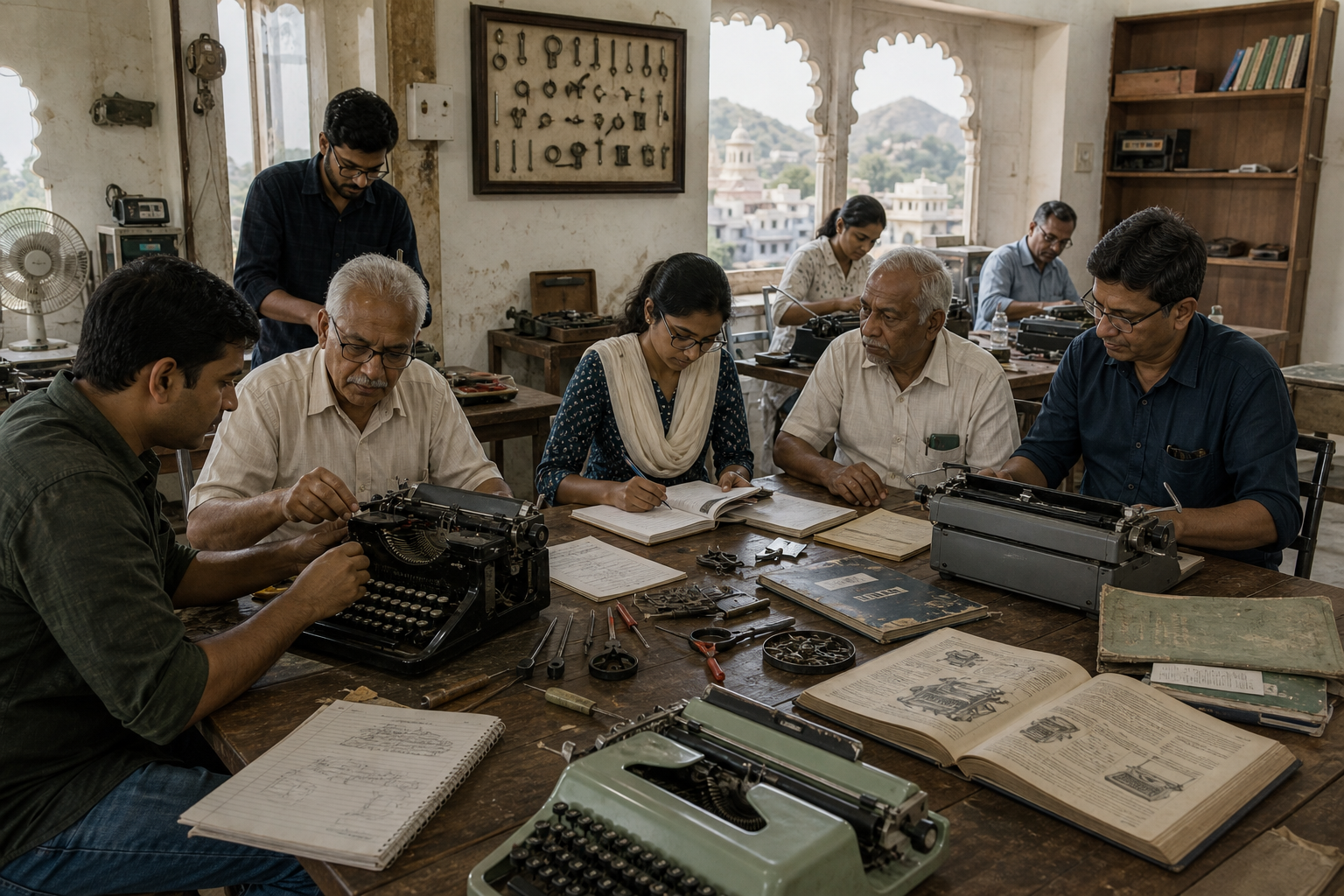
TRC records field-based knowledge systems with contextual notes, oral history references, and regional practice evidence.
Internal Subsection
TRC documents experienced practitioners, trainers, technicians, collectors, and typewriter communities in rural, tribal, and regional contexts, including the Aravalli and Udaipur region, so practical knowledge not always present in formal archives is preserved with dignity.
Oral Knowledge Registries
Interview-led records of tacit craft methods, terminology, and work memory.
Repair Traditions
Local maintenance and adjustment practices carried through workshop lineages.
Teaching Practice
Regional instructional routines linking training centers, classrooms, and apprentices.
Local Documentation Networks
Distributed evidence pathways that connect field observations to institutional archives.
Institutional Recognition
Senior contributors who shaped TRC's early archival direction and professional standards.
Academic and archival partners extending comparative study, documentation depth, and review rigor.
Community-linked practitioners and record keepers sustaining continuity across local typewriter cultures.
Emerging partners helping extend field records, shared custodianship, and long-term institutional continuity.
Participation & Access
Practical answers for researchers, collectors, institutions, and public readers who want to contribute, correct, collaborate, or consult TRC materials.
Independent researchers, collectors, restorers, writers, students, and institutional specialists are all welcome to submit knowledge and documented findings.
Primary-source documentation is most valuable: manuals, catalogs, serial data, mechanism notes, restoration records, and well-attributed photographs or scans.
Submitted corrections are reviewed against available evidence, then integrated with revision notes so updates remain transparent and traceable for future research.
Yes. TRC supports institutional collaboration through shared documentation standards, co-developed datasets, and attribution-aware publication pathways.
Core research pages are publicly accessible for learning and reference, while specialized records may include contextual notes on provenance, rights, or access limits.
TRC welcomes technical analyses, comparative model studies, script and language evidence, document histories, restoration methodologies, and verified historical sources.
If your material is partial, submit it anyway—TRC can help place it within broader archival context.
Contribute KnowledgeInstitutional Continuity
Through rigorous research, structured documentation, and open public knowledge practices, we sustain a long-term archival record that supports scholars, institutions, and global communities of practice.